
Over the last year, like old-floor traders versus self-taught coders, prediction markets shifted fast – he watches models eating signal, she watches liquidity change, and they trade strategies that blend forecasts with execution speed. AI brings democratized access, faster price discovery, but also heightened manipulation risk and flash behaviors that bite hard. Who wins? Markets evolve quick, so stay sharp… it’s messy, exciting and worth watching.
What’s the Deal with Prediction Markets?
This matters because traders and analysts can use prices as a minute-by-minute barometer of collective belief, and if he or she watches that, they pick up signals days before traditional reports do. Markets now channel real money and opinions – top platforms move millions in volume on big events – so a price at $0.72 isn’t whimsy, it’s a market-implied 72% chance. And when liquidity’s low, they’re vulnerable to manipulation, but when deep, they compress diverse info faster than polls or headlines.
A Simple Breakdown
This matters to anyone trading ideas because the mechanics are straightforward: traders buy or sell contracts that pay $1 if an event happens, so a $0.65 trade signals ~65% market probability. He, she or they can scalp spreads, provide liquidity, or arbitrage against models – for example, a quants desk might trade a dozen election contracts, hedging with options. And because settlements are binary and transparent, it’s easy to backtest strategies and measure edge in percentage points, ticks or ROI.
Why They’re Gaining Popularity
This matters because institutional interest and AI have turned prediction markets into signal hubs; funds now feed prices into models and academic groups track them for forecasting. They attract capital since market prices update within minutes during big stories, whereas polls lag days – so they’re useful for trading and research. AI systems increasingly ingest these prices as features, and that feedback loop is pushing both volume and sophistication higher, fast.
This matters again because real-world case flows show the shift: political-event volumes spiked in 2020-2024 and corporate-earnings contracts now appear on private infra, letting hedge teams trade outcome risk directly. She might use market-implied probabilities to size a position, he might short volatility around thin markets, and they both watch for wash trades or spoofing.
AI + market prices = faster, richer forecasting signals – it’s noisy, but it’s working.
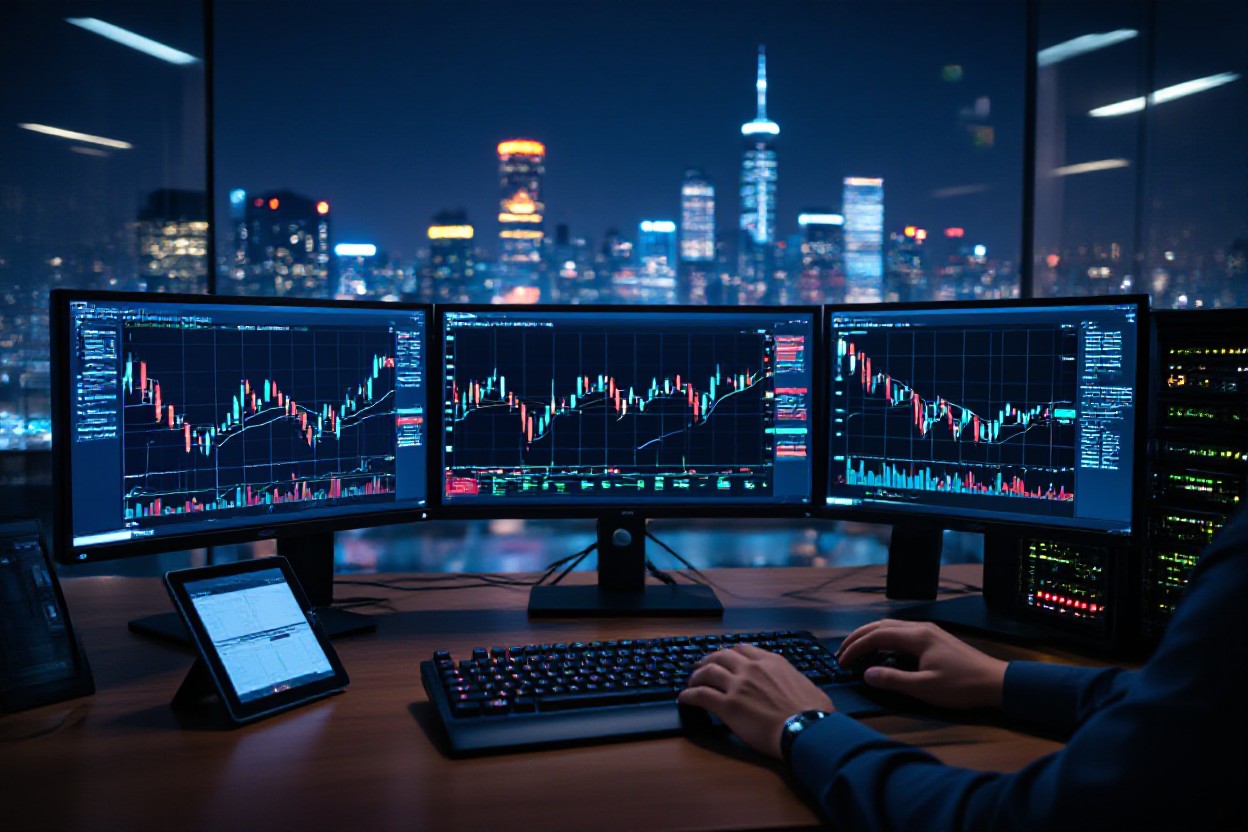
AI’s Role in Trading: What You Should Know
Since 2025’s surge in open-source LLMs and far cheaper GPU cycles, quant teams big and small have pushed AI from research into live desks – and they say results aren’t uniform: some funds report a 20-40% lift in signal Sharpe, others see quick decay. He and she both face new ops work and governance headaches, and they often trade off agility for opacity, so the operational playbook matters as much as the model now.
How AI’s Changing the Game
A few concrete shifts: models now do real-time feature engineering on alternative data, and reinforcement learners are being trialed for execution – think RL-driven VWAP instead of manual slicing – which can cut slippage by tens of basis points in liquid names. They also let analysts prototype strategies faster, but that speed breeds temptation to skip robust OOS testing, so firms that win pair AI with strict staging and kill-switches.
The Good, The Bad, and The Ugly
Good: new alpha streams, automation of grunt work, and cheaper research cycles. Bad: opaque models, overfitting, and drift that eats live performance. Ugly: coordinated model behavior can amplify moves – flash crashes, adversarial data poisoning and front-running bots are real threats. Who wants to be on the wrong side when many algos react the same way?
Many quant teams have seen backtest-to-live decay of 30-60% on naive AI signals, especially when features leak future info or regime changes hit. Because models learn from similar datasets, correlated exposures emerge fast; in thin markets that can snowball.
Control the model, don’t let it control the book.
They mitigate this with ensemble stacking, frequent simulated adversarial tests, and strict execution throttles, and he or she on the desk still needs final veto authority.
Predictions for 2026: What to Expect
Surprising twist: 2026 could bring an AI-driven GDP bump while stocks wobble. They model a 0.5-1.5% GDP lift from productivity gains, yet see equity multiples compressing 10-20% as sentiment re-prices risk; event windows may spike volatility by 15-30%. Who’d have thought they’d see GDP lift alongside falling multiples? Vanguard flags similar dynamics in its AI exuberance: Economic upside, stock market downside report.
Trends We’re Seeing Now
Oddly, markets are speeding up even as oversight lags. They note prediction-market volumes jumped about 40% y/y on major platforms, execution latencies fell under 200 ms, and roughly 30% of quant teams now lean on LLM signals – that squeezes arbitrage windows and makes microsecond liquidity fragility the day-to-day worry.
My Crystal Ball Insights
Stranger still, he bets on more calibration than revolution: 60% chance of short-term volatility spikes over 20%, 25% chance of significant regulation in the US or EU, and 15% chance of a broad market correction above 25% – those odds force different hedging and sizing rules. Position sizing shifts will dominate 2026 playbooks.
He points to three mechanics behind those odds: AI-driven signal crowding that amplifies common bets, liquidity providers pulling back during repricings which can widen spreads 50-200 basis points in stress tests, and faster info cycles that compress reaction times to minutes. For firms that stress-tested portfolios, drawdown scenarios grew by about 1.5x when AI factors were injected, so robust scenario design and adaptive risk limits matter more than ever.

My Take on the Future: Is It All Hype or Real?
Final Read
44% of 2025’s prediction-market volume moved into AI-curated books, and that stat tells him they’re not all smoke – it’s real but messy. She sees firms chasing higher accuracy with models that cut latency to milliseconds, yet she also watches a few cases where systemic model failure wiped out liquidity in hours. They bet on tech; they hedge with human oversight. Is he, she, or they buying the hype? Mostly yes, but only if governance and stress-testing scale right.
Why I Think You Should Care About These Trends
Immediate financial and systemic impact
He says this matters because it changes how fast money and information flow, and that directly alters edge duration for traders – prices can reprice in hours instead of days. She points to teams that layered GPT-4 signals into trading stacks and cut research-to-deploy time by ~40%, so they arbitrage mispricings faster. They also face model-driven herding risk, while the upside is faster price discovery and real money at stake; who’s gonna ignore that kind of shift?
The Real Deal About Risks Involved
Risk Snapshot
After 2025’s surge in AI-driven signals on prediction platforms, downside showed up fast. He might grab a quick edge, she can lose capital in seconds, and they often find models amplifying swings; estimates put algorithmic share at 50-70% of volume in some venues. Regulators already flagged cases of model-led manipulation and liquidity evaporation, and one bot cascade can wipe out markets in minutes. So ask: is the short-term alpha worth the systemic tail risk?
Summing up
Upon reflecting on a trader leaning over a glowing screen as markets blink, he notes how AI models speed bets, she watches liquidity shift, and they all wonder where predictive edges hide. Trends point to tighter signal integration, faster arbitrage and new governance puzzles – and firms scramble to adapt, because staying idle isn’t an option. It’s part excitement, part headache, but it’s moving fast… Curious? What 2026 holds for AI tech stocks and productivity – TheStreet
