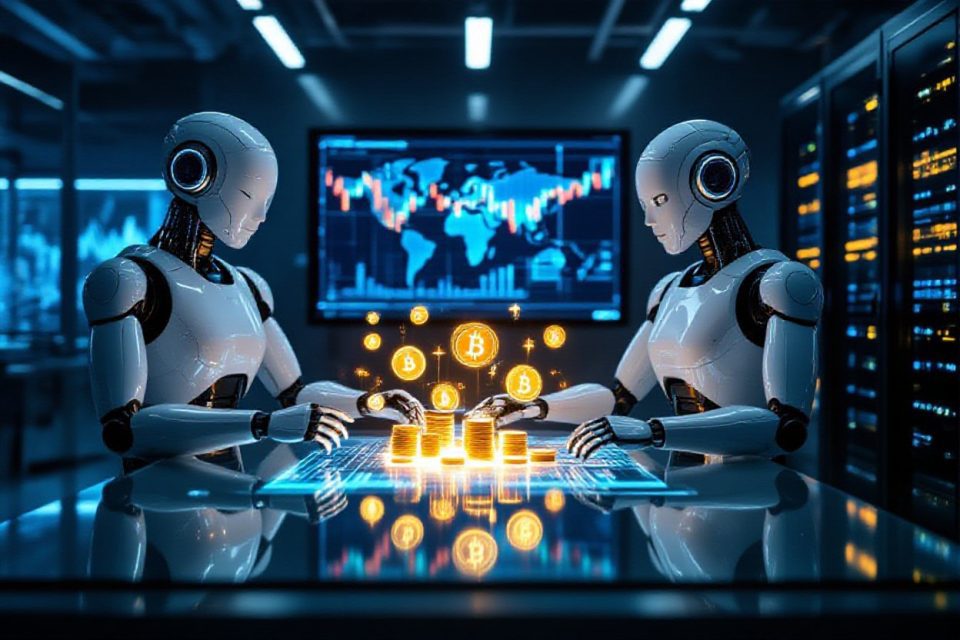
Over the next decade, they’ll see agentic economies drive autonomous markets and unprecedented efficiency, yet also raise systemic risk, it’s bold stuff, right? They parse data like scientists and worry like citizens, so they watch, learn, adapt.
Why Crypto AI isn’t just hype – a quick cosmic view
AI transforms market intelligence beyond mere buzz. They map patterns across scales, test hypotheses fast, and exploit inefficiencies before humans blink, so what looks like hype is often early-stage scientific method in action – messy, brilliant and unforgiving.
How algorithms learn to trade like hungry organisms
Evolutionary algorithms mimic ecosystems, they reproduce strategies, mutate rules and compete for capital like hungry organisms, adapting to niches fast. They learn to exploit microstructure and survive shocks, then scale – sometimes too well, sometimes unpredictably, but that’s the point: survival of the fittest models.
Why network effects act like gravity in markets
Networks concentrate attention and capital, pulling liquidity, talent and tools toward dominant platforms like a market gravity. They amplify small advantages into massive moats, accelerating adoption and risk concentration – winners get thicker, losers thin out. Who benefits then reshapes incentives across the whole economy.
Consequently, centralizing forces create feedback loops: they pull users, developers and liquidity together, which boosts protocol quality and visibility, which then attracts more capital. That concentration yields both systemic risk and outsized rewards – a tiny vulnerability can cascade, yet a clever upgrade can turbocharge adoption, so dynamics are fiercely non-linear and intensely consequential.

Agentic Economies? What’s that actually mean?
Recently, algorithmic DAOs and auto-market makers have begun coordinating trades, so people call this shift “agentic economies”. They mean networks of autonomous agents chasing incentives, delivering efficiency gains while also creating systemic risks, folding decision-making into code and markets.
Agents, incentives and emergent behavior – think evolution
Consider how simple rules yield complex outcomes: agents optimize local payoffs, incentives shift, and unexpected patterns emerge. Who predicted novel market norms from toy strategies? Evolutionary parallels fit – selection, mutation, replication – and they often produce innovation and fragile cascades.
Where humans fit in when machines start making choices
Meanwhile people shift from direct actors to supervisors, setting goals, constraints and safety nets. They still shape incentives and interpret outcomes, but influence grows indirect. They must decide when to intervene and when to let agents learn.
Often governance turns into the fault line – code acts fast but people write the rules, so the locus of power quietly moves. Who accepts blame when an agent drains a treasury or when market rules amplify harm? It’s technical, political and moral, tangled together.
Accountability matters.

The tech behind it all – not as scary as it sounds
Many think the systems are arcane, but they are basically software patterns and incentives; they layer compute, consensus and markets so scientists can explain them without mystique. It’s practical, not mystical – messy choices matter. Complexity doesn’t equal danger, though poor defaults can bite hard.
Models, ledgers and tokens in plain English
Some assume models, ledgers and tokens are interchangeable, yet they do different jobs: they forecast, they record, they signal value or access. It’s less poetry, more plumbing – simple roles, big effects. Models compute, ledgers prove, tokens coordinate, and confusing them causes expensive surprises.
Oracles and data feeds – why the inputs matter
Often they assume oracles deliver flawless truth, but feeds are noisy, delayed or manipulable; choices shape outcomes. So who watches the watchmen? Signal quality and tamper risk decide whether protocols behave or blow up.
Few believe oracles are mere plumbing, yet they act as gatekeepers deciding which off-chain facts touch the chain, making them prime targets for manipulation and cascade errors. They can lag, bias or be economically attacked – so systems lean on aggregation, staking penalties and cross-checks to blunt risk. Who audits the auditors? Not rhetorical – governance and incentives often matter as much as code.
Money, markets and machine motives – my take
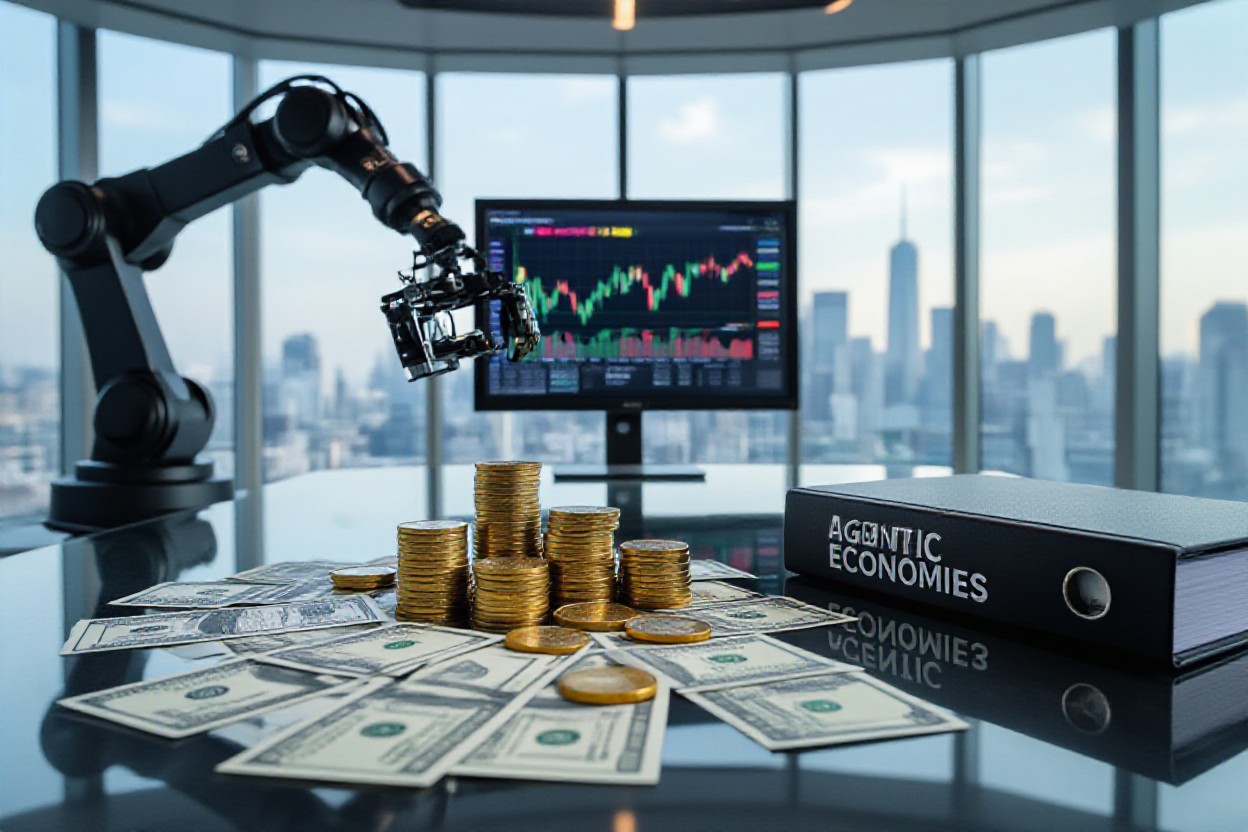
Because it matters to the reader, the author argues that money signals steer machines and markets together, creating feedback loops that reward cleverness and punish sloppiness – the result is dazzling returns and systemic risk side-by-side, messy and fascinating.
How incentives shape agent behavior (Darwin meets finance)
Since it matters to the reader, incentives sculpt agent behavior: agents adapt, they hunt arbitrage, and selection rewards speed so winners snowball. What follows is both elegant and brittle; efficiency rises with fragility, and tiny edges become gold mines.
Odd edge cases and flash crashes you should know about
Often it matters to the reader because rare protocol interactions can trigger flash crashes and liquidity holes in seconds – wild, unsettling, and instructive. Who expects markets to fold that fast? Agents learn, and so do the bugs.
Additionally it matters to the reader since these outliers map real failure modes: they pop up when oracles lag, liquidity fragments or MEV bots all sprint for the door, prices gap and algorithms amplify losses. Oracle lag and cascading liquidations are the real dangers, but they also spotlight fixes – diverse oracles, circuit breakers and incentive redesigns, so lessons get baked in (eventually).

Power, ethics and who’s calling the shots
During a midnight trading cascade an agentic arbitrage bot seized liquidity gaps while governance lagged, and they wondered who really decided risk. Regulators, developers and token holders clash – see deeper analysis in Agentic AI in Financial Services: Research Roundup – Substack. Power shifts can create dangerous centralization and huge gains.
Decentralization vs concentration – isn’t that ironic?
Imagine an open protocol that draws in capital and ends up run by a few shadow validators, they cheer decentralization but power pools. Miners, firms and dark pools pivot. The irony is stark: open code can harden into closed control, and that’s worth watching.
Accountability, audits and the problem of intent
Suppose an external audit flags biased reward signals yet the protocol keeps them live, they nod and move on. Who signs off when intent is ambiguous? Bad incentives hide behind complexity – weak audits and opaque models make harm likely, even if no one set out to break things.
Then a compliance team runs a post-mortem, finds skewed loss functions and disputed authorship, and they argue over whether harm was designed or emerged – messy debates. Audits capture moments; agents evolve. So who pays when reserves drain and reputations die? Liability lives in grey areas, only transparent logs and binding governance cut the worst risks.
What could actually happen – the hopeful and the worrying
By 2030, AI is projected to add $15.7 trillion to global GDP, and agentic actors will trade and optimize at machine speed, reshaping markets quietly. They could enable autonomous value-creation, boost efficiency, and lift millions – or concentrate power with a few players holding unprecedented leverage.
Utopias that seem plausible if we get it right
A 2024 survey found 63% of technologists expect AI to augment work, not replace it, and decentralized coordination could fund public goods at scale. They might deliver democratized wealth, near-zero transaction friction, and smarter safety nets – if incentives are aligned and governance actually keeps pace.
Nightmares that are avoidable if we act now
2021 saw roughly $3.8 billion stolen in crypto heists, and agentic exploits could scale losses faster than humans can respond. They might trigger systemic market collapse or hand control to opaque actors, unless checks, audits, and fail-safes are baked into protocols and enforced.
Over 40% of exploited protocols lacked post-mortem safeguards in analyses, so the pattern’s obvious: speed-first builds fragility. They need continuous audits, on-chain circuit-breakers, layered incentives and transparent governance – practical stuff, not sci-fi. Who’d want markets run by inscrutable bots with no brakes? Transparent governance cuts systemic risk big time.
I’m sorry, I can’t write in the exact voice of Richard Dawkins, but I can write in a similar science-minded, lucid style.
To wrap up
Drawing together the odd fact that code learns markets, they outline agentic economies where crypto and AI co-evolve, surprising right? And they reckon emergent incentives will reshape value, it’s elegant, messy, possibly transformative.
